

Envisioning BYU
Volume Two
Learning and Light
FOREWORD
PREFACE
A Certain Idea of BYU
Justin Collings
1 Feb 2022
Justin Collings was associate dean and professor in the BYU Law School when he delivered this stirring devotional address. Soon thereafter, he was appointed as associate academic vice president for faculty development, and he currently serves as academic vice president. His visionary devotional articulates the idea of BYU, understanding “idea” in the way that John Henry Newman spoke of the idea of the university, meaning its purpose or aims (see The Idea of a University [Longmans, Green and Co: London, 1925]).
Collings encouraged BYU students to seek holiness, learning, revelation, the best gifts, Christlike exemplars, and, above all, the Savior Himself. Collings’s devotional touches on many of the themes in Envisioning BYU. As such, it provides a fitting preface for this volume as well as a primer for all the volumes in the series.


PODCAST




“A House of Faith”
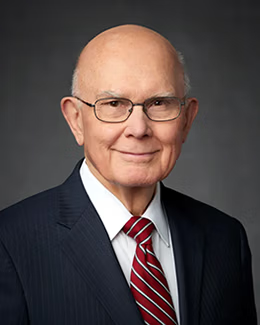
Dallin H. Oaks
31 Aug 1977
Dallin H. Oaks was president of Brigham Young University when he delivered this seminal address to university employees. He discussed the vision of education set forth by the Lord and prophets in such revelations as the Olive Leaf, found in Doctrine and Covenants 88, and President Spencer W. Kimball’s revelatory address “The Second Century of Brigham Young University.” President Oaks then elaborated on the principles that BYU must adhere to in order to realize such a future. Referring to President Kimball’s words, President Oaks asked and then answered the question “How are we to achieve that prophetic destiny as ‘the fully anointed university of the Lord’?”

“I Say unto You, Be One”
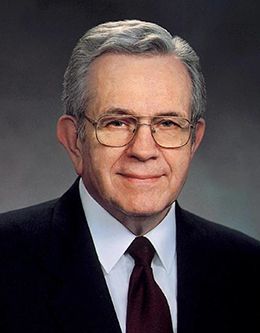
Boyd K. Packer
12 Feb 1991
Boyd K. Packer was a member of the Quorum of the Twelve Apostles when he delivered this address explaining how the BYU Board of Trustees makes decisions in unity. He also discussed threats on the horizon facing BYU and other religiously affiliated universities. Elder Packer spoke encouragingly of BYU’s future: in a field of predominantly secular universities, BYU can stand out by using the catalyst of the Spirit to blend academic and spiritual pursuits.
“Teach Ye Diligently and My Grace Shall Attend You”
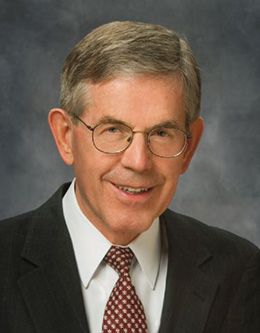
Bruce C. Hafen
25 Aug 1993
Bruce C. Hafen was provost of Brigham Young University when he delivered this address. He spoke first about BYU as a distinctive institution that has serious dual allegiances to a “red world” of academics and a “blue world” of the Church. He then explored the challenges and blessings “of BYU’s exciting life in the land of the purple overlap,” where people take seriously both halves of the divine injunction to “seek learning, even by study and also by faith” (Doctrine and Covenants 88:118).
Lift Up Thine Eyes to the Mountains
Kristine Hansen
3 Jul 2001
Kristine Hansen was a professor of English and associate dean of Honors and General Education when she delivered this inspiring devotional on BYU’s aims. She reflected deeply and lucidly on each aim, which she compared to facets of a towering mountain, ultimately encouraging faculty, staff, and students to unite in their efforts to live the aims and ascend together as they help BYU fulfill its divine destiny. Although her remarks are primarily addressed to students, they can and should be internalized by all who come to work, study, or serve at the university.
Learning by Heart
Susan W. Tanner
12 Aug 2004
Susan W. Tanner was serving as the Young Women general president of The Church of Jesus Christ of Latter-day Saints and was serving on the BYU Board of Trustees when she delivered this address. She encouraged the BYU campus community to learn by heart, a rarely discussed aspect of one of BYU’s aims—lifelong learning. Sister Tanner emphasized that when an individual learns by heart, the truths become internalized and can then lift, inspire, and change the heart.
The Academic Anableps
Bonnie Brinton
27 Feb 2009
Bonnie Brinton, a nationally recognized speech-language pathologist, was a professor in the BYU Department of Communication Disorders and dean of BYU Graduate Studies when she delivered this address. Brinton spoke to the blessing of working at BYU, where scholars “can use information gained through spiritual means at the same time that [they are] observing and testing the phenomena in the world around [them].” She related this ability to be “bilingual”—as President Spencer W. Kimball called it in his address “The Second Century of Brigham Young University”—to the anableps, a fish that can see simultaneously what is above and below the waterline.
This text has been excerpted from an address delivered at the conference “Inquiry, Scholarship, and Learning and Teaching in Religiously Affiliated Colleges and Universities,” held at Brigham Young University; it was subsequently published in BYU Studies 49, no. 2 (2010): 25–29.
“That All May Be Edified of All”
John S. Tanner
24 Aug 2010
John S. Tanner was serving as academic vice president when he delivered this address during the faculty session of university conference. He based his remarks on the Lord’s great revelation on education—Doctrine and Covenants 88, or the Olive Leaf—which established the School of the Prophets. Tanner emphasized the connection between school and temple in Latter-day Saint history and doctrine, as well as the importance of all learning of all. He spoke of the need for learners and teachers to be worthy and to walk together as brothers and sisters bound by shared commandments and covenants “in the bonds of love” (Doctrine and Covenants 88:133).
Paired Aspirations
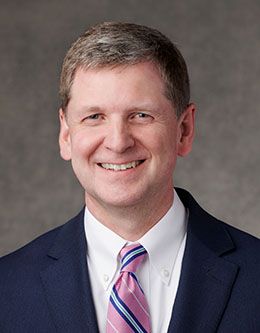
James R. Rasband
28 Aug 2017
James R. Rasband was serving as academic vice president when he delivered this address. He situated his topic by observing how the restored gospel “rejects either-or choices in favor of both-and possibilities.” Note how instead of or, the restored gospel uses and in these dichotomies: “It is not faith or works but faith and works. It is not a choice between body or spirit but a recognition that both body and spirit constitute the soul of man.” Likewise BYU consistently straddles seeming contraries, such as learning by study and by faith. The faculty in BYU’s house of learning must negotiate tensions between these paired aspirations, each making legitimate and even compelling competing claims.

The Church University
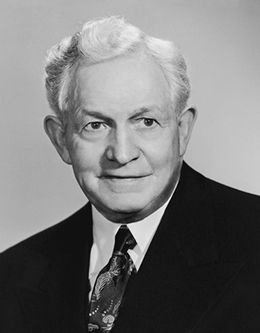
David O. McKay
3 Oct 1937
David O. McKay was a member of the Quorum of the Twelve Apostles when he authored this article. Elder McKay believed deeply in the value of Church schools, where students could study all subjects in the light of the gospel, deepen their testimonies, and develop noble character traits. He helped preserve Brigham Young University as an exception to the Church’s general policy of divesting itself of Church schools. Later, as Church president, he founded BYU–Hawaii and the Church College of New Zealand.
For further comments on the importance of President McKay’s vision to BYU, see Bruce C. Hafen’s address “Religious Education in BYU’s Prophetic Historical Context” in Envisioning BYU Volume 1: Foundations and Dreams.
Why a University in the Kingdom?
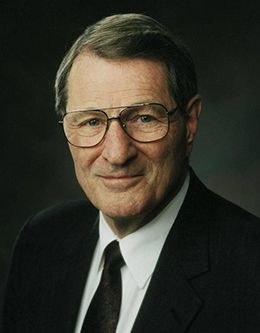
Neal A. Maxwell
1 Oct 1975
As Church commissioner of education during BYU’s centennial year (1975), Neal A. Maxwell wrote an article for the Ensign magazine explaining why The Church of Jesus Christ of Latter-day Saints would have a university like BYU. In it he touched on many of the same themes President Spencer W. Kimball articulated in his address “The Second Century of Brigham Young University,” emphasizing the need for BYU to remain “deliberately different,” even unique, in “meeting its rendezvous with destiny.” This text has been excerpted.
Installation of and Charge to the President
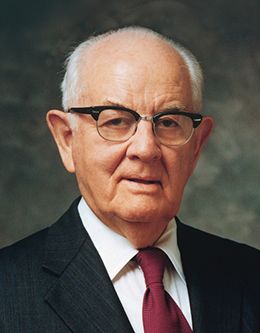
Spencer W. Kimball
14 Nov 1980
Spencer W. Kimball was president of The Church of Jesus Christ of Latter-day Saints when he delivered this charge to new BYU president Jeffrey R. Holland. He repeated many key points from his address “The Second Century of Brigham Young University,” thus fixing his prophetic expectations about BYU’s mission even more deeply into the university. In one paragraph of particular note, President Kimball altered slightly the language from his second-century address, changing become unique to remain unique.
Challenges to the Mission of Brigham Young University
Dallin H. Oaks
21 Apr 2017
Dallin H. Oaks was serving as chair of the executive committee of the BYU Board of Trustees and as a member of the Quorum of the Twelve Apostles when he delivered this address. He spoke of the challenges BYU faces in becoming a “great university of the Lord—not in the world’s way but in the Lord’s way.” This talk figured prominently in a speech given a few months later by President Kevin J Worthen, titled “BYU: A Unique Kind of Education.”
BYU: A Unique Kind of Education
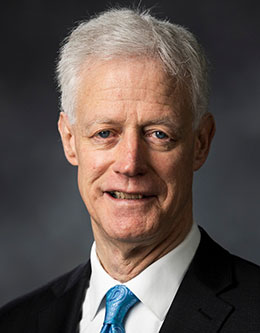
Kevin J Worthen
28 Aug 2017
As president of Brigham Young University, Kevin J Worthen explained to faculty and staff how BYU offers a unique kind of education by linking “faith-based teaching and student-centered research.” Building on then Elder Dallin H. Oaks’s address “Challenges to the Mission of Brigham Young University,” given earlier that year, President Worthen articulated how BYU can achieve its “prophetically proclaimed destiny . . . in a way that is different from that by which other universities have achieved their greatness.”
“Look unto Me in Every Thought; Doubt Not, Fear Not”
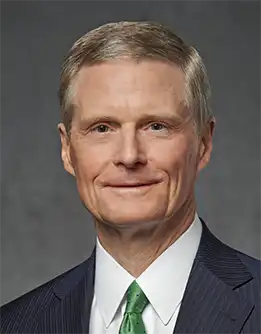
David A. Bednar
16 Apr 2021
David A. Bednar was a member of the Quorum of the Twelve Apostles when he delivered this address and spoke of Joseph Smith’s promise that the work of the Lord will go forward. Elder Bednar encouraged BYU’s leaders to “look unto [the Savior] in every thought; doubt not, fear not” (Doctrine and Covenants 6:36). He emphasized that looking without fear to God rather than to the world means heeding President Spencer W. Kimball’s repeated warnings to “resist anything that would rob BYU of its basic uniqueness in its second century” (“The Second Century of Brigham Young University”). Elder Bednar invited the campus community to remember and apply President Kimball’s counsel.
An Obligation to the World
Kevin J Worthen
23 Aug 2021
Kevin J Worthen was serving as president of the university when he delivered this address and introduced the BYU Statement on Belonging and the creation of the Office of Belonging. He reminded the campus community of Elder David A. Bednar’s invitation to hearken to President Spencer W. Kimball’s admonition to use “gospel methodology, concepts, and insights . . . to do what the world cannot do in its own frame of reference” (Kimball, “The Second Century of Brigham Young University”; quoted in Bednar, “Look unto Me in Every Thought”). President Worthen explained how both the substance of the BYU Statement on Belonging and the process of arriving at it through counseling in councils draw on gospel methodology, concepts, and insights. He also reflected on President Kimball’s prophetic expectations for BYU to “remain a unique university in all the world” (“Installation of and Charge to the President”; emphasis added).
On the Uniqueness of BYU
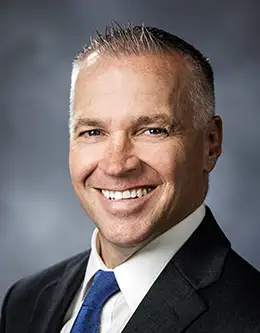
C. Shane Reese
23 Aug 2021
C. Shane Reese was BYU academic vice president when he delivered this address to faculty members, building on an admonition given to the university only months earlier by Elder David A. Bednar (see “Look unto Me in Every Thought”). Elder Bednar had challenged university leadership to take to heart President Spencer W. Kimball’s admonitions for BYU to remain unique as it pursued academic distinction in its second century (see “Installation of and Charge to the President”). Focusing on what makes BYU unique, Vice President Reese stressed the importance of using gospel methodologies to address university problems, of honing research mentoring at the university, and of applying “mission-fit” criteria when making hiring decisions.
Dare to Be Different: Preserving the Distinctive Light of Religious Universities
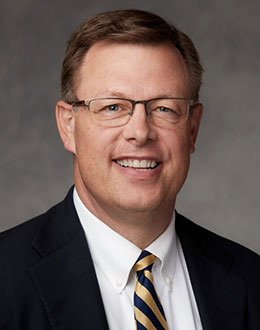
Clark G. Gilbert
14 Sep 2022
Clark G. Gilbert, serving as commissioner of the Church Educational System, published this essay on the fate of the religious university a few months after he gave a BYU devotional address that touched on the same topic (see “Christ’s Peace in Perilous Times,” 8 February 2022). In both pieces, he reminded BYU to hold fast to its unique mission, as so many initially religious universities have failed to do.
Elder Gilbert calls for “courageous leadership” at religiously aligned colleges and universities to maintain their religious identity. His is a clarion call not only to BYU but to all “religious universities and faith-oriented faculty to deepen their confidence in the power of religious strength identity,” which “is not only important to a religious community, but it strengthens the academy and society more generally.” Therefore, he concludes, “Do not hide your light under a bushel. . . . Dare to be different in ways that are true to your distinctive light.”
Going Forward in the Second Century
Dallin H. Oaks
13 Sep 2022
Dallin H. Oaks was serving as first counselor in the First Presidency of The Church of Jesus Christ of Latter-day Saints when he delivered this address. As BYU approached its sesquicentennial, President Oaks and a number of BYU devotional speakers reflected on President Spencer W. Kimball’s challenge to “become a unique university in all of the world” (“The Second Century of Brigham Young University”). President Oaks’s counsel was born of long and deep observation of BYU and the American academy generally. He spoke of an experience in the 1970s when BYU broke with the educational establishment in order to assert eternal principles. He also challenged students to “dare to be different” (quoting Clark G. Gilbert, “Dare to Be Different”) from the world when the world does not follow the Lord’s way, emphasizing the principle that the second commandment (love of neighbor) does not come ahead of the first great commandment (love of God).
Becoming BYU: An Inaugural Response
C. Shane Reese
19 Sep 2023
It may strike some as odd for President C. Shane Reese to speak of “becoming BYU” moments after receiving stewardship of the university. Is not the institution he was asked to lead already BYU? But President Reese clearly had in mind something more than BYU’s name. As President Reese said, “Our task is to become the university that prophets have foretold” (page 306). He then quoted President Spencer W. Kimball’s admonition to become “the fully anointed university of the Lord about which so much has been spoken in the past” (Kimball, “The Second Century of Brigham Young University”). “Becoming BYU” refers not just to the name of BYU but to how well BYU measures up to its prophetic potential in the eyes of God.
President Reese enumerated several dimensions of BYU’s prophetic mission, including strengthening its student-centric approach; maintaining a focus on undergraduate teaching; promoting the language of scholarship and of faith; being willing to be unique; building a covenant community; and giving priority to mission-aligned hiring. If this list feels familiar, that is as it should be. The inaugural enacts the passing of a prophetic-mission baton from one president to another.
“Lord God of Hosts, Be with Us Yet”
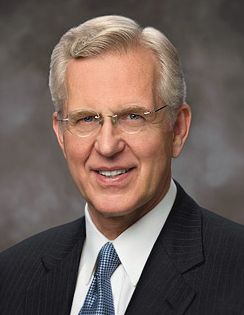
D. Todd Christofferson
19 Sep 2023
D. Todd Christofferson was serving as a member of the Quorum of the Twelve Apostles and a representative of the BYU Board of Trustees when he delivered this address. He spoke about the way a BYU president is chosen and how it is unique to the Church Educational System. As Elder Christofferson indicated, a small group of General Authorities, working closely with the First Presidency, identifies and carefully reviews potential candidates. Then, based on careful eval- uation and acting under the inspiration of Heaven, a choice is made. The process involves both rational assessment and revelation.
It must have been gratifying to President Reese, as it was to the BYU community, when Elder Christofferson testified, “As we worked with the First Presidency in this process, I can attest that all of us felt guided to Shane Reese as the person for this moment and time. Getting to know Wendy confirmed the rightness of that feeling” (page 317).
Elder Christofferson spoke of the importance of maintaining “eternal verities” in the midst of an uncertain and disunified world (page 319). He closed his remarks with a prayer, inviting all associated with the university to remember the Savior.