

Devotional

“The Condescension of God”

Second Counselor in the First Presidency of The Church of Jesus Christ of Latter-day Saints

December 2, 2025

Audio
0:00/23:39
Download
Play
0:00
Full Video
Speech link copied

There is nothing we experience that He does not comprehend and that He does not have power to address and redress. He knows; He understands; His love is perfect.
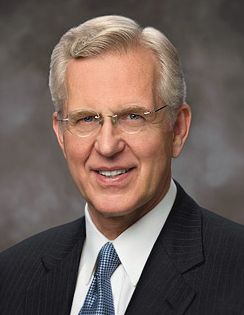

What a tremendous time it is to be a student at BYU! Of course our athletics teams are performing at a high level in their respective sports and represent the university with exemplary sportsmanship and integrity. And may I add a word of appreciation for our music and choral programs, the quality of which we have just witnessed with the BYU Men’s Chorus.

These and other colleges, departments, and programs define a standard of excellence, and this is all part of a broader spiritual momentum spreading across the university. We see this in your remarkable president and his Becoming BYU initiative. Do you know that between them, President Reese and Academic Vice President Justin Collings interview every prospective faculty member who is hired on this campus? That requires more than 150 interviews each year! This is a tremendous investment by the leadership of this university, and it shows their commitment to finding the most qualified people to teach the students on this campus. We commend your faculty who model teaching that is both “intellectually enlarging” and “spiritually strengthening.”1

Of course you—our students—are part of this spiritual momentum. You are attending devotionals in record numbers, and you report a greater commitment to our Savior and to His prophet as you leave BYU to serve across the Church. It has been a few years since Kathy and I were students here. We wish we could reenroll and join you in this remarkable season in the history of this great university. We love BYU. We love President and Sister Reese. And we love you. There is real momentum happening on this campus, and I hope you can feel it.

A Birth Manifesting the Supreme Love of God for All His Children

At Christmas, with hymns and praise and gifts, we celebrate the birth of Jesus Christ some 2,000 years ago. We celebrate His birth because it was the beginning of a life and mission that hold ultimate and eternal significance for all of us. This birth manifested the supreme love of God for all His children, a love that the Book of Mormon calls “the most joyous to the soul.”2

Centuries before, the prophet Nephi was granted a vision of the Savior’s birth, ministry, death, and resurrection. During this magnificent vision, an angel posed this question to Nephi: “Knowest thou the condescension of God?”3 Nephi was uncertain, and to explain the meaning and significance of that term—“the condescension of God”—the angel showed Nephi the virgin who would become “the mother of the Son of God, after the manner of the flesh,”4 and then a scene of this pure young woman bearing the Christ child in her arms.5 Nephi then understood that the Son of God would come to earth to rescue fallen man.

In the grand premortal heavenly council, when the Father asked who would offer his life to redeem mankind—redemption being the most crucial element of God’s plan for the happiness and glory of His children—this Firstborn among spirits declared, “Here am I, send me.”6 He thus became “the Lamb . . . slain from the foundation of the world”7 who, by His atoning blood, would reconcile us to God and lead us back into His presence.

Condescension means to descend voluntarily from a higher rank or dignity to a lower level or status. The great Jehovah of the Old Testament, the premortal Jesus Christ, voluntarily condescended to leave His divine throne above to live in a mortal state on the very earth that, under the direction of the Father, He had created, for “all things were made by him; and without him was not any thing made that was made.”8

It is all but impossible to grasp the magnitude of our Savior’s condescension. Imagine a divine being with intelligence and power sufficient to create this earth, a planet capable of sustaining billions of our Father’s children and many other creatures over many thousands of years. Now He lays aside His glory and powers and descends to His creation, His “footstool,”9 as a helpless babe, born in a humble stable with a manger used to feed animals as His cradle. He experiences what all of us experience: growing over time in consciousness and capacity—developing from infancy to childhood to youth to adulthood. As the Only Begotten Son of God (God being the Father not only of Christ’s spirit but also of His body), Jesus’s learning is more rapid and advanced than anything even the brightest of us have ever experienced; yet it is for Him, as for us, not instantaneous. The scriptures record that

he received not of the fulness at the first, but received grace for grace;

And . . . continued from grace to grace, until he received a fulness.10

In this state of condescension, Jesus of Nazareth experiences hunger and deprivation, fatigue and pain, persecution and rejection. In Isaiah’s words, He is “a man of sorrows, and acquainted with grief.”11 On one occasion, Jesus laments, “The foxes have holes, and the birds of the air have nests; but the Son of man hath not where to lay his head.”12 So He lies in the very dust that is the least of His creations. In the end, He is “led, crucified, and slain, the flesh becoming subject even unto death.”13

And why this incomprehensible condescension? Could not Jesus have performed His infinite Atonement, so fundamentally crucial to our immortality and eternal life, without also having to experience mortality from birth to adulthood? Could He have simply come as a man rather than as a babe and still have accomplished His atoning mission? I cannot say, but surely it is by divine design that the Son of God lived a life and performed a ministry that not merely tell us but show us the way of discipleship, the way to God. Beginning with His own baptism, witnessing “unto the Father that he would be obedient unto him in keeping his commandments,”14 He not only taught but demonstrated what it means to walk the covenant path. Throughout His life, culminating in His suffering and death on the cross, “he descended below all things, in that he comprehended all things, that he might be in all and through all things, the light of truth.”15

And so “we have not an high priest which cannot be touched with the feeling of our infirmities; but was in all points tempted like as we are, yet without sin.”16 There is nothing we experience that He does not comprehend and that He does not have power to address and redress. He knows; He understands; His love is perfect. With His Resurrection, just as He “descended below all things,” Jesus has now overcome and risen above all things:

He hath put all enemies under his feet.

The last enemy . . . [being] death.17

Now He sits “on the right hand of God, to claim of the Father his rights of mercy which he hath upon the children of men.”18

Jesus’s condescension, His willingness to live in this fallen world and show us the meaning of His gospel in day-to-day life, is truly an act of genuine love. He indeed has shown us His “more excellent way.”19 He is “the way.”20 We should study His life and model His discipleship. His condescension, culminating in His Atonement, gives hope, direction, and purpose to our lives.

In a sense, you too are experiencing a personal condescension of your own. Prior to your birth, you lived in a higher state—you lived in the presence of God, your Heavenly Father. His plan to help you achieve your highest and happiest destiny entailed your voluntary condescension or descent from that “first estate” to a lower “second estate.”21 Your birth was a spiritual death, removing you from the presence of God. Now, just as Jesus passed through mortality, you are passing through a mortal experience in a fallen world.

Jesus condescended to experience life in a physical body with all its miraculous powers but with its ailments and pains as well. The same is true for you. He condescended to experience temptation and overcome sin. So did you.22 He condescended to learn to exercise agency by faith and to submit in all things to the will of the Father.23 As the scripture says, “Though he were a Son, yet learned he obedience by the things which he suffered.”24

So it is for you. Jesus condescended to serve and minister to His brothers and sisters, and so did you. Above all, the Savior voluntarily condescended to leave His throne on high to rescue mankind from sin and death. You are here, first, to apply His divine gift of repentance in your life and by His grace overcome sin and death, and, second, to bring others to Christ to receive this same gift of repentance and life eternal.

Jesus was faithful in His second estate and has received a fulness of glory. As you keep your second estate through your faith in Him and with His atoning grace, your destiny is also that fulness as one of the “joint-heirs with Christ.”25

Enduring to the End

Remember that for His condescension to achieve its full purpose, Jesus Christ had to endure to the end. It was supremely difficult for Him, even the great Jehovah, to complete the unimaginably intense suffering and death required to atone for our sins and overcome both spiritual and physical death. Mark records that, in the process, the Savior was “sore amazed,”26 even astonished at the suffering. Multiple times He begged the Father to take that bitter cup from Him if there were any other way to accomplish what only He could accomplish. At that moment, eternity—our eternity—hung in the balance.

There was no other way. Despite the grief this Tender Parent must have felt for His suffering Son—His Beloved Son—the Father could not, consistent with the great plan of redemption, grant Jesus’s plea. God could only send an angel to strengthen Him.27 In the end, the submissive Savior declared, “Not my will, but thine, be done.”28 Jesus drank that excruciatingly bitter cup to the last drop—to the end.

Of this hour, when the great Redeemer defeated all evil, He later reflected:

[This] suffering caused myself, even God, the greatest of all, to tremble because of pain, and to bleed at every pore, and to suffer both body and spirit—and would that I might not drink the bitter cup, and shrink—

Nevertheless, glory be to the Father, and I partook and finished my preparations unto the children of men.29

He endured to the end. For our condescension to achieve its full purpose in our lives, you and I also must endure to the end. This truth is expressed repeatedly throughout the scriptures. Here are three examples from just one chapter in 2 Nephi:

And I heard a voice from the Father, saying: Yea, the words of my Beloved are true and faithful. He that endureth to the end, the same shall be saved.

And now . . . , I know by this that unless a man shall endure to the end, in following the example of the Son of the living God, he cannot be saved. . . .

. . . Wherefore, if ye shall press forward, feasting upon the word of Christ, and endure to the end, behold, thus saith the Father: Ye shall have eternal life.30

What is the peculiar significance of enduring to the end? Its significance lies in the need not simply to believe in Christ but to develop the character of Christ if we are to live with Him and the Father eternally. It is about what we are becoming. It is not just about boxes we check or points we collect for doing good. Salvation is not a matter of good works alone; neither is it a matter of divine grace alone. Works and grace matter because of their role in what we are becoming. And it is by what we are and what we are becoming that we keep our second estate and qualify to “have glory added upon [our] heads for ever and ever.”31

Some years ago, President Dallin H. Oaks pointed out:

The Final Judgment is not just an evaluation of a sum total of good and evil acts—what we have done. It is an acknowledgment of the final effect of our acts and thoughts—what we have become. . . . The commandments, ordinances, and covenants of the gospel are not a list of deposits required to be made in some heavenly account. The gospel of Jesus Christ is a plan that shows us how to become what our Heavenly Father desires us to become.32

Therefore, for those of us who have received the gospel of Jesus Christ in this mortal estate and have entered upon His covenant path, the question at the end of life will be this: Are we still on that path of discipleship? Are we still on the course that demonstrates both our desire and our capacity “to abide the law of a celestial kingdom . . . [and to] abide a celestial glory”?33 Our final judgment will measure what we have become and, even more importantly, what we have shown we can yet become. Clearly, perfection is not required for salvation. What matters is that we enter on the covenant path and remain on the covenant path to the end and that if we deviated from that path at any point, we returned to it—that we were faithful to the end and at the end.

Your suffering and mine, and the sacrifices that may be required of us in the process of remaining faithful to the end, will not in any degree approach what Christ endured. But however great or small the challenge, just as was shown in Jesus’s life, we can count on the Father’s help, His angels, and His Holy Spirit. In addition, we have the infinite grace of Christ to forgive and sanctify us from sin. In the October 2025 general conference, Elder Dieter F. Uchtdorf explained, “We know that our efforts alone cannot make us celestial. But they can make us loyal and committed to Jesus the Christ, and He can make us celestial.”34

The Lord Himself affirms:

No unclean thing can enter into [the] kingdom [of God]; therefore nothing entereth into his rest save it be those who have washed their garments in my blood, because of their faith, and the repentance of all their sins, and their faithfulness unto the end.

Now this is the commandment: Repent, all ye ends of the earth, and come unto me and be baptized in my name, that ye may be sanctified by the reception of the Holy Ghost, that ye may stand spotless before me at the last day.35

Elder Bruce R. McConkie, a member of the Quorum of the Twelve Apostles in years past, observed that if we are on “the straight and narrow path”36 as we go out of this life, our probation is ended, our test in mortality is finished, and we are assured of being able to continue on that path to its conclusion. He said:

There is no such thing as falling off the straight and narrow path in the life to come. . . . Now is the time and the day of your salvation, so if you’re working zealously in this life—though you haven’t fully overcome the world and you haven’t done all you hoped you might do—you’re still going to be saved.37

Though you may have a very great distance yet to go after death, you will be able to continue pressing forward to eternal life.

“Overcome the World” with Christ

We are fully justified in joyously celebrating the birth of Jesus. It is this tender beginning that eventually led to His Atonement that, in turn, leads to the new beginnings in our lives and faithfulness to the end of our lives. As Elder Patrick Kearon recently observed, “Repentance opens the door to our new beginnings, fresh starts, and second chances.”38 Christ’s gift of repentance allows us to begin anew and continue forward each day, to progress from grace to grace, to confidently sacrifice the lesser for the greater, and to overcome and with Him gain immortality and eternal life.

Jesus assures us that “as often as my people repent will I forgive them their trespasses against me.”39 In other words, as long as we are serious about it, there is no quota, no limit on the number of times we can repent, seek forgiveness, and move forward on His path. Remember Paul’s reassuring words: “Let us therefore come boldly unto the throne of grace, that we may obtain mercy, and find grace to help in time of need.”40

Our beloved brother, Elder Von G. Keetch of the Seventy, who died too young almost eight years ago, reminded us of the fruits of the Lord’s condescension with these words:

Life will always have its valleys and peaks. Everyone will have moments of great peace and happiness and times of great challenge. At times, life will be richly joyful. At other times, it will be terribly painful. To paraphrase Elder Holland, because of the Birth in Bethlehem and what it led to, there is nothing in life that need be eternally tragic. There is a happy ending. There is a rising after the falling. There is life and [there is] love always. There are new births and rebirths and resurrection to eternal life. It is the joy of the stable. But much more important, it is the joy of the empty tomb—forever.41

As you celebrate Christmas and Easter each year, I invite you to reflect on the mortal life and mission of Jesus Christ and His condescension to save you. I invite you to think of your own condescension, its purpose, and how you too, having descended into a fallen world, may with “good cheer” rise above and “overcome the world” with Christ.42 I plead with you to “take up [your] cross daily, and follow [Jesus]”43 faithfully, to the end. I testify that Jesus was born of Mary, that He lived on earth, and that He now lives, the God of our redemption.

Wherefore God also hath highly exalted him, and given him a name which is above every name:

That at the name of Jesus every knee should bow, of things in heaven, and things in earth, and things under the earth;

And that every tongue should confess that Jesus Christ is Lord, to the glory of God the Father.44

I invoke His blessings and peace upon you at this happy season, in the name of Jesus Christ, amen.

© by Intellectual Reserve, Inc. All rights reserved. 

Notes

1. The Aims of a BYU Education (1 March 1995).

2. 1 Nephi 11:23.

3. 1 Nephi 11:16.

4. 1 Nephi 11:18.

5. See 1 Nephi 11:20.

6. Abraham 3:27.

7. See Moses 7:47.

8. John 1:3.

9. Abraham 2:7.

10. Doctrine and Covenants 93:12–13.

11. Isaiah 53:3.

12. Matthew 8:20.

13. Mosiah 15:7; see also Philippians 2:5–8.

14. 2 Nephi 31:7.

15. Doctrine and Covenants 88:6.

16. Hebrews 4:15.

17. 1 Corinthians 15:25–26.

18. Moroni 7:27.

19. Ether 12:11; 1 Corinthians 12:31.

20. John 14:6.

21. Abraham 3:26.

22. See Moses 6:55.

23. “The will of the Son being swallowed up in the will of the Father” (Mosiah 15:7).

24. Hebrews 5:8.

25. Romans 8:17.

26. Mark 14:33.

27. See Luke 22:43, also verses 39–46; Matthew 26:36–46; Mark 14:32–42.

28. Luke 22:42; see also Matthew 26:39; Mark 14:36.

29. Doctrine and Covenants 19:18–19.

30. 2 Nephi 31:15–16, 20; emphasis added.

31. Abraham 3:26.

32. Dallin H. Oaks, “The Challenge to Become,” Ensign, November 2000; emphasis in original.

33. Doctrine and Covenants 88:22.

34. Dieter F. Uchtdorf, “Do Your Part with All Your Heart,” Liahona, November 2025; emphasis in original.

35. 3 Nephi 27:19–20.

36. See 2 Nephi 31:18–19.

37. Bruce R. McConkie, “The Probationary Test of Mortality,” Salt Lake Institute of Religion devotional address, 10 January 1982.

38. Patrick Kearon, “Jesus Christ and Your New Beginning,” Liahona, November 2025.

39. Mosiah 26:30.

40. Hebrews 4:16.

41. Von G. Keetch and Bernice Keetch, “Three Levels of Christmas,” self-published (Shutterfly), November 2018, 17; paraphrasing Jeffrey R. Holland, “Christmas Comfort,” Ricks College devotional address, 1 December 1998 (later included in Holland, Shepherds, Why This Jubilee? [Salt Lake City: Eagle Gate, 2000]; see pages 73–74).

42. John 16:33.

43. Luke 9:23.

44. Philippians 2:9–11.

See the complete list of abbreviations here

“The Condescension of God”

D. Todd Christofferson, second counselor in the First Presidency of The Church of Jesus Christ of Latter-day Saints, delivered this devotional address on December 2, 2025.