Joseph Smith Lecture 7: Doctrinal Development and the Nauvoo Era
Richard L. Evans Endowed Professor and BYU Professor of Philosophy
 Facebook
  Twitter/X

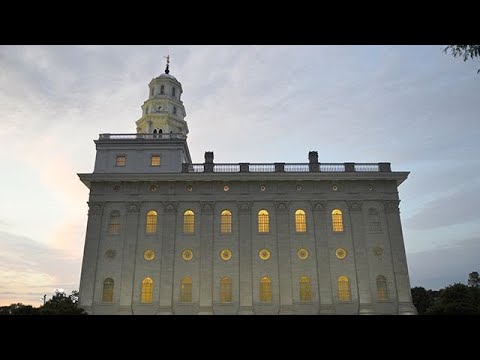
The Nauvoo era also was the period of a life-and-death struggle, for there were many who by that time were organized against the Church and who swore they would bring Joseph Smith and his kingdom of blockheads to naught.
At Nauvoo in the early 1840s (the date is not certain) the Prophet Joseph Smith gave a great discourse on the temple. He said, among other things: “Now, brethren, I obligate myself to build as great a temple as ever Solomon did, if the Church will back me up.” He closed by saying: “And if it should be the will of God that I might live to behold that temple completed and finished from the foundation to the top stone, I will say, ‘Oh, Lord, it is enough. Let thy servant depart in peace,’ which is my earnest prayer in the name of the Lord Jesus. Amen.”1
As the months passed and the difficulties increased, apparently he came to feel by the Spirit that he would not live to see the Nauvoo Temple finished. In anticipation of that, he made several important decisions.
On May 4, 1842, he called to his side nine of the most faithful of his brethren—Hyrum Smith, Brigham Young, Heber C. Kimball, Willard Richards, Newell K. Whitney, and others—and later their wives came with them.2
“If it should be the will of God that I might live,” he had said. Now, he continued and said in effect, “It is not the will of the Lord that I should live, and I must give you, here in this upper room, all those glorious plans and principles whereby men are entitled to the fulness of the priesthood.”3 He proceeded in an improvised and makeshift way to do so.
How did Joseph Smith know all these ordinances, and how were they transmitted to us today? The promise is recorded in section 124 of the Doctrine and Covenants, given in 1841, that the Lord would reveal to Joseph “all things pertaining to this house, and the priesthood thereof, and the place whereon it shall be built.”4 We have a further glimpse in the occasion already referred to—May 4, 1842—when a few faithful men received their endowments.5 We have from Brigham Young this testimony, that after they had received these glorious blessings the Prophet said: “Brother Brigham, this is not arranged right. But we have done the best we could under the circumstances in which we are placed, and I wish you to take this matter in hand and organize and systematize all these ceremonies.” Then, Brigham Young later said, “I did so. And each time I got something more [meaning that each time he worked on systematizing he had not only his memory and the records kept by Wilford Woodruff and others but also the light of revelation], so that when we went through the temple at Nauvoo [and without Joseph] I understood and knew how to place them there. We had our ceremonies pretty correct.”6
Speaking of that occasion in May 1842, Joseph said: “The communications I made to this council were of things spiritual, and to be received only by the spiritual minded: and there was nothing made known to these men but what will be made known to all the Saints of the last days, so soon as they are prepared to receive, and a proper place is prepared to communicate them, even to the weakest of the Saints; therefore, let the Saints be diligent in building the Temple, and all houses which they have been, or shall hereafter be, commanded of God to build; and wait their time with patience in all meekness, faith, perseverance unto the end, knowing assuredly that all these things referred to in this Council are always governed by the principle of revelation.”7
Other sources tell us more of what was in the heart and mind of the Prophet in this period regarding the temple. Speaking in 1835 to a group of elders about to go on missions, he had said, “You need an endowment, brethren, in order that you may be prepared and able to overcome all things.”8 Bathsheba W. Smith recorded that on one occasion the Prophet said to her, “You do not know how to pray and have your prayers answered.” Then she added that when she and her husband received their endowments, they learned how to pray.9 Mercy R. Thompson recalled that she received her temple blessings in an upper room of the Mansion House prior to the temple dedication, that the Prophet’s wife, Emma, officiated, and that the Prophet said to her (Mercy Thompson), “This will bring you out of darkness into marvellous light.”10 Anticipating the inclusion of women in the temple ordinances, he told the sisters of the Relief Society, “The Church is not fully organized, in its proper order, and cannot be, until the Temple is completed.”11 More than a half-dozen of those who finally received their blessings just prior to the movement west recorded their belief that they might have been overwhelmed by the ravages of the plains and the challenges of colonization if it had not been for the blessings of the Nauvoo Temple.12
As for temple proxy service, Jacob Hamblin recorded: “The Prophet Joseph had told the people that the time had come which was spoken of by the Prophet Malachi, . . . the Saints must seek for the spirit of this great latter-day work [meaning the work of the temple] and that they must pray for it until they received it.”13
Horace Cummings recorded: “Concerning the work for the dead, [Joseph] said that in the resurrection those who had been worked for would fall at the feet of those who had done their work, kiss their feet, embrace their knees and manifest the most exquisite gratitude.” The Prophet added, “We do not comprehend what a blessing to them these ordinances are.”14
One who caught the spirit of this work was Wilford Woodruff, and his journal is full of memories and details. Wilford Woodruff is the man who wrote in a journal almost every day for sixty-three years, thereby producing perhaps the most important single historical treasure we have in the Church.15 Why did he keep the journal? Because the Prophet admonished him to. By my estimate, more than two-thirds of what we have of firsthand records of Joseph Smith’s discourses and counsels to his brethren would have been lost had it not been for Wilford Woodruff’s makeshift shorthand and then staying awake, often till past midnight, transcribing his notes into readable English. In that journal Brother Woodruff recorded the Prophet’s announcement that the Saints could be baptized for the dead in the Mississippi River prior to the temple’s completion, but that there would come a time when the Lord would accept that no longer.16 They would have to do it in the temple. This privilege was received with great joy, and people flocked to the riverside to be baptized on behalf of departed relatives and friends.17 Not understanding at first, they were baptized without regard to gender—men for both men and women, and women for both men and women—and without a recorder present. But with the benefit of further thought and revelation, the Prophet was able to put this right, so that things were done in order, witnessed, and properly recorded.18
In the Nauvoo period, the Prophet was at least able to get a roof over his own head, with the help of his brethren, and that home became the crossroads. Visitors came, some prominent, some merely curious, and some of course intent upon his destruction. William H. Walker indicated how kind the Prophet tried to be in coping with this increasing flow.19 Josiah Quincy, later mayor of Boston, was one of those who came.20 Another, whose diaries we haven’t been equally eager to read (they were locked up in a vault for a century), was Charles Francis Adams, son of John Quincy Adams and grandson of John Adams, both United States Presidents. Charles Francis Adams was not as impressed with Joseph as was Josiah Quincy. He was full of prejudices. He was a little unhappy about having to pay a quarter to Mother Smith in order to see the Egyptian mummies upstairs in the Mansion House. Of the Prophet’s claim to be able to translate some of the inscriptions, he wrote merely, “The cool impudence of this imposture amused me.” He did, however, speak of the shame and injustice of the Saints’ being driven and persecuted in a country whose constitution guaranteed religious freedom. But to him, the Prophet was a lightweight and a deceiver.21 This confirmed Wilford Woodruff’s comment that “the Gentiles look upon him, and he is like a bed of gold concealed from human view.”22
In that same home there were meetings and other efforts on the Prophet’s part to strengthen his brethren and further prepare them. During the winter of 1843–44, for example, he met almost daily and sometimes twice a day with all the faithful members of the Council of the Twelve. Orson Pratt finally complained, “Why do you give us no rest?” and the Prophet replied, “The Spirit urges me.”23 Erastus Snow says of that period that he learned more in a few months in council with the Prophet than he had learned in all his life before.24 Others, Parley P. Pratt among them, tried to keep notes. In that period Joseph reviewed every restored principle, authority, and ordinance, completing it with a summary of the summary in a meeting in late March 1844 in which he said, in effect: “Brethren, I have conferred upon you now, every key and principle and power that has been bestowed upon me. Now you must round up your shoulders and bear off the kingdom or you will be damned.”25 In that same meeting the Prophet reconfirmed to the Twelve that Brigham Young, the presiding head of the Twelve (whom he had ordained thus at Quincy, Illinois, late in 1839), held the keys of the sealing power.26 They knew it then, they knew it later, and all that has been said about other leadership intentions of the Prophet is thus superseded.
The Prophet came to love the situation at Nauvoo—the beauty of that place, the temple, and the zealous construction efforts of the Saints. As a way of trying to prevent a recurrence of what had happened in Missouri, they had their own charter, their own plan of government, their own city ordinances. They even had their own militia, the Nauvoo Legion. It was not a great crack unit of military men, but the group of several thousand was at least drilled occasionally and was trained to be able to defend the Saints’ lives and homes under pressure. It was the fear of that legion, John Taylor suggested, that postponed disaster as long as it was postponed.27 But the irony is that, having enlisted and trained up to five thousand men, many of them very young men, the Prophet himself insisted during his final days that they must stay home during the very crisis that they might have done something to resolve. He submitted in a statesmanlike way when he might instead have ordered the destruction of his enemies and laid waste much of Illinois.
We read of the organization of the women during the Nauvoo period and their full involvement in all the ministrations of the temple. I have hinted earlier of the Relief Society and its strength, what great women they were, how the Prophet charged them and pleaded with them for compassion and help. He often said it was not just their duty to aid and save the poor in a temporal way, but it was ultimately their duty to save souls.28 He said in their midst that it is the nature of woman to have largeness of soul and compassion.29 Emma, denominated the elect lady in an early revelation, was the president.30 The kinship she felt with those sisters and theirs for her has sometimes been obscured. It was strong. It was moving. And what they went through and how they coped with everything from breech births to the last stages of malaria will someday be known, to their eternal credit.31
Nauvoo also is the place where the Church established patterns which have continued to our own generation. There, for the first time, were the rudiments of a youth organization, for example, as well as the beginnings of sacrament meetings and an orderly procedure in them. In Nauvoo there was not a Sunday School per se, but often there were Sunday meetings besides sacrament meetings—prayer meetings and teaching meetings of various descriptions. The Saints were straining then as always to outdo their resources as they struggled with missionary work, and mission after mission was opened.
The Nauvoo era also was the period of a life-and-death struggle, for there were many who by that time were organized against the Church and who swore they would bring Joseph Smith and his kingdom of blockheads to naught. Joseph would say that he had suffered interminably because he claimed to be a prophet, though in fact everyone can be a prophet. His argument went roughly like this: All around me the Christian world is saying, “There are no prophets and therefore you are a false prophet.” But in fact, anyone who has the testimony of Jesus has the spirit of prophecy (Revelation 19:10), and thus is a prophet. Moreover, when a man says, “If you will do so and so you will be saved, but if not, you will not be saved,” is he not making a prediction about salvation and the things of God? Therefore, being a predictor he must either be a true or a false prophet. I have been given authority to say that certain things must be done in order to inherit the fulness of salvation and that some of the things men have claimed are requirements are not. The Holy Ghost is my witness.32
It is ironical that men who did not believe in prophecy nevertheless predicted that the Church would fail. “Thus ends Mormonism,” said a newspaper headline the morning after the Prophet was killed. Mormonism has not ended.33
At the end of the Wentworth letter (written in 1842) the Prophet wrote a paragraph which I reread in moments of discouragement. “No unhallowed hand can stop this work from progressing; persecutions may rage, mobs may combine, armies may assemble, calumny may defame, but the truth of God will go forth boldly, nobly, and independent, till it has penetrated every continent, visited every clime, swept every country, and sounded in every ear, till the purposes of God shall be accomplished, and the great Jehovah shall say the work is done.”34 Magnificent, prophetic promise!
But just as he said that, he also said that as the work of the kingdom of God increases and expands, so the work of opposition will increase and expand; and that the closer we come to living celestial law, the greater the opposition to be expected.35 Let us now focus on some gems that came from the Prophet in this period that are not as well known as others of our scriptures, but which were nevertheless recorded by those whom we can trust.
“Mormonism,” he wrote, “is the pure doctrine of Jesus Christ; of which I myself am not ashamed.”36 When asked what was different about Mormonism, he replied in effect, “We teach and testify of Jesus Christ.”37 To the President of the United States he responded by emphasizing the gift of the Holy Ghost: “In our interview with the President, he interrogated us wherein we differed in our religion from the other religions of the day. Brother Joseph said we differed in mode of baptism, and the gift of the Holy Ghost by the laying on of hands. We considered that all other considerations were contained in the gift of the Holy Ghost.”38
Of the Holy Ghost he said elsewhere: “If you will listen to the first promptings you will get it right nine times out of ten.”39 He is talking here of the impressions—elsewhere he speaks of flashes—that come from the Spirit. All of us tend to second- and third-guess these promptings (apparently women do it less than men). For instance, we are given a Church assignment, and an impression comes as to what to do with it. And then we begin to forget; we start to analyze and doubt. How shall we do it? Nine out of ten times “the first promptings.” That was his counsel. It is wisdom.
Here are some other gems:
“No one can ever enter the celestial kingdom unless he is strictly honest.”40 That’s a hard one. My own bishop has told me that when he asks individuals whether they are strictly honest, most people reply, “I try.” Eventually we must do more than “try.”
Another comment on honesty: “A man who has an honest heart,” said the Prophet, “should rejoice.”41
“Any man who will not fight for his wife and children is a coward.”42 Joseph Smith, the Prophet of the Lord Jesus Christ, was not a pacifist. Yes, his voice was always for peace. But read Doctrine and Covenants 98. “It may be,” he said, “that the Saints will have to beat their plows into swords, for it will not do for men to sit down patiently and see their children destroyed.” The Prophet felt, and said elsewhere, that one thing uglier than war is cowardice and the refusal to stand for one’s own loved ones in the breach.43
Speaking of gratitude he once remarked that if you will thank the Lord with all your heart every night for all the blessings of that day, you will eventually find yourself exalted in the kingdom of God.44 This is a powerful statement on the spiritual necessity of gratitude. The scripture says, “He who receiveth all things with thankfulness [notice the “all” in that: difficulties, strains, disaster, setbacks] shall be made glorious; and the things of this earth shall be added unto him, even an hundred fold, yea, more.”45 Joseph was one of the most grateful men who ever lived.
Oral tradition attributes another wise maxim to the Prophet: “Don’t climb to the extreme branches of the tree, for there is danger of falling: cling close to the trunk.” One translation: Avoid the vain mysteries and the discussion of them. Avoid imaginative speculation. But Joseph Smith, one must quickly add, made a distinction between the mysteries of godliness—that is, the deeper things that can only be known by revelation to the soul on the how of living a godly life—and the speculative pursuit of matters that are without profit to the soul. “I advise all to go on to perfection,” he said, “and search deeper and deeper into the mysteries of Godliness.”46 The vain mysteries are those of which we know nothing and need not know anything—whether, for example, the pearly gates swing or roll, or what is the ultimate destiny of the sons of perdition. “Cling close to the trunk.”
Now one of the strongest and wisest statements I have ever heard on egoism. The question was put to him: “Joseph, is the principle of self-aggrandizement wrong? Should we seek our own good?” Listen to his answer. “It is a correct principle and may be indulged upon only one rule or plan—and that is to elevate, benefit, and bless others first. If you will elevate others, the very work itself will exalt you. Upon no other plan can a man justly and permanently aggrandize himself.”47 That is another way of saying with the New Testament, “Whosoever shall lose his life for my sake and the gospel’s, the same shall save it.”48 To paraphrase: He that seeketh to save his life has mere physical survival. He that is against me, or indifferent to me, will lose it. “What shall it profit a man, if he shall gain the whole world, and lose his own soul?”49 Nothing.
Through all his Nauvoo teachings Joseph displayed a sense of mission. Lorenzo Snow reported a day when someone came and asked Joseph (it had happened hundred of times), “Who are you?” He replied, “Noah came before the flood. I have come before the fire.”50 That leads to a probing question: How much did Joseph Smith know about himself and his own calling? Clearly his knowledge grew and expanded from the initial encounters of the Sacred Grove. But what really was implicated in that tantalizing phrase picked up by enemies and friends, “You do not know me”? Or, in his turning to people on the stand (this happened at least three times in Nauvoo) and saying, “If I revealed all that has been made known to me, scarcely a man on this stand would stay with me”?51 In another case he said, “If the Church knew all the commandments, one-half they would condemn through prejudice and ignorance.”52 To a group he once said: “Brethren, if I were to tell you all I know of the kingdom of God, I do know that you would rise up and kill me.” Brigham arose and said, “Don’t tell me anything that I can’t bear, for I don’t want to apostatize.”53
Two things on record may help with questions about the scope of Joseph Smith’s role. In a Nauvoo discourse54 Joseph refers to the first chapter of John wherein John the Baptist was asked, “Who art thou?” He replied that he was not the Christ. “What then? Art thou Elias? Art thou that prophet [who is to come]?”55 Joseph’s critics would have thought it a stretch for him to say, “You see, there is a reference to a great prophet to come. I am he.” With the discovery of the Dead Sea Scrolls and embellished traditions, sometimes fanciful, in later Judaism, it becomes apparent that two centuries before Christ a tradition taught that there were two messianic figures to come. The Messiah ben Judah, the Son of Judah, the Son of David, the Stem of Jesse, would indeed redeem. But alongside that set of prophecies and all they entailed was another set about a son of Joseph who would be a restorer of all things.56 I said to a Harvard scholar who was famous for his New Testament skill, “What possibly could be restored?” He said, “Well, you know the phrase in the Lord’s Prayer that says ‘Thy kingdom come.’ This was to be offered by Christians who had just received the kingdom in Jesus. But clearly the prayer presupposes that something more is to come.” Then he said, “There’s also that language in the Book of Acts about the ‘restitution of all things.’”57 This man is an expert on the Dead Sea Scrolls. He knows nothing of Joseph Smith (or didn’t before we had our conversation). If the restorer wasn’t a Joseph named Smith, the world must wait for “that prophet who is to come,” who is to restore all things.58
We might wonder if the Prophet himself knew of these ancient patterns, if he had a glimpse that there was such a strand, down through the centuries, even between the periods of the Old and the New Testaments, when men had that word-of-mouth tradition. If so, did he recognize his own greatness in that term?
In this discourse, he speaks of seven dispensations, and says that the one Joseph led would be the last dispensation.59 His brother Hyrum, who surely saw him as a man and as a brother, yet said earnestly, “There were prophets before, but Joseph has the spirit and power of all the prophets.”60
Joseph knew that he had been called in this the greatest of all dispensations. And I think he knew that meant something as to his own calling, a calling that was initiated before this world was created.
That leads to the second point on which he gives us a little insight. “Every man,” he said, “who has a calling to minister to the inhabitants of the world, was ordained to that very purpose in the Grand Council of heaven before this world was.” And then he added, with some care and caution, “I suppose that I was ordained to this very office in that Grand Council.”61 But he didn’t merely suppose. By the end, he knew.
Brigham Young, who went without bread and much else in order to hear the Prophet speak on any subject at any time, even if he was only expressing opinions—that same Brigham Young who would die with the name of Joseph on his lips—once said, in a family reunion in Nauvoo, that what Joseph had in mind in saying, “You do not know me” was essentially a matter of heritage and blood.62 The Lord God had made covenant with Joseph who was sold into Egypt that in the last days that branch of Israel would indeed run over the wall, and God by appropriate unions of ancestors had watched over that blood until it came pure and unsullied into Joseph.63
Brigham Young suggested Joseph was conscious of this preordained role and how the Lord had brought it about. As to the latter, an interesting letter was written from Orson Pratt to his brother Parley P. Pratt in the 1850s that says in effect: “You will recall that Joseph had a vision in which he saw that our ancestral line [meaning the Pratt brothers] and his [meaning the Smiths] had a common ancestor a few generations back.”64 Apparently neither Parley nor Orson was able to confirm the link. The letter remained in an attic until about 1930, but then a granddaughter took it to Archibald F. Bennett, one of the outstanding genealogists of the Church, and he did the research.
He discovered that several generations back from Joseph Smith there was indeed a common ancestor named John Lathrop, and that not only was he the common ancestor of the Pratt brothers and Joseph Smith but also of other early Church leaders, including Wilford Woodruff, Oliver Cowdery, and Frederick G. Williams. In fact one estimate concludes that one-fourth of the early Church members in America were descended from John Lathrop.65
The Prophet taught we would one day discover that all of us, regardless of our present guesses and researchings as to origins and family, have in our veins the cumulative blood of Israel, and whether by actual birth or by adoption into the kingdom, or both, the Almighty intends that we shall belong literally to the family of Abraham. Those of us who have mostly gentile inheritance will find that through the renovating powers of the Holy Ghost we are made, as Joseph said, literally the seed of Abraham. The visible effect of that experience, he said, may be more powerful than is the impact of the Holy Ghost on others who have more of the blood of Ephraim.66 The kingdom is not a “closed shop.” It is not a power-mongering super-race. It is an open family into which we are grafted, and through which probably most of us have a heavy genealogical debt.
Joseph was an Ephraimite. He was ordained in the Grand Council before the world was. And he was that great prophet who was to come.
© 1989 Truman G. Madsen. ℗ 2003 Deseret Book Company. All rights reserved.
For personal, educational use only. No part of this work may be reproduced in any form or by any means outside of your personal digital device without permission in writing from Deseret Book Company at permissions@deseretbook.com or PO Box 30178, Salt Lake City, Utah 84130.
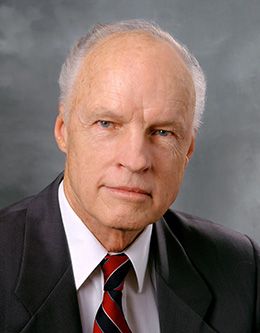
Truman G. Madsen, Richard L. Evans Endowed Professor and BYU professor of philosophy, delivered eight lectures on the Prophet Joseph Smith at BYU Education Week in August 1978.
Related Topics
Related Speeches