





Speech link copied
Making Every Effort: Patience, Professionalism, and Spirituality
President of Brigham Young University
August 25, 2025
President of Brigham Young University
August 25, 2025


Prophets lift our gaze. They help us see above the clouds and chaos to catch a glimpse of our divine potential and destiny.
It might be said that the idea of BYU began with a boom.
On April 5, 1876, the day before general conference, three gunpowder reserves in Salt Lake City ignited. The ensuing explosion sent rocks and rubble across the city. The blast was felt as far north as Farmington, Utah, and numerous homes and buildings sustained damage—including the Twentieth Ward schoolhouse. A newspaper report at the time read:
The walls [of the schoolhouse] are cracked and the roof broken. The building will have to be greatly repaired before it can be considered safe.1
The Twentieth Ward schoolhouse’s principal happened to be none other than Karl G. Maeser. After assessing the damage to the school, Brother Maeser went looking for his bishop, John Sharp. He found Bishop Sharp in counsel with President Brigham Young. Brother Maeser reported to both men on the schoolhouse’s damage, but it became clear the prophet’s thoughts were elsewhere.
“Brother Maeser,” President Young interjected, “I have another mission for you.” He was “considering the establishment of a Church school” and was searching for the right person to lead it. The prophet then declared: “You are the man, Brother Maeser. We want you to go to Provo to organize and conduct an Academy to be established in the name of the Church—a Church school.”2
By month’s end, Brother Maeser was headed to Provo. It was then that President Young offered up his famous charge “not to teach even the alphabet or multiplication tables without the Spirit of God.”3
Prophets lift our gaze. They help us see above the clouds and chaos to catch a glimpse of our divine potential and destiny. They “see around corners,”4 as Sheri Dew has so aptly put it.
Prophets have inspired BYU since its beginning. And they continue to guide this enterprise during this, our 150th year. That is our strategic advantage as we seek to “become BYU,” the “Christ-centered, prophetically directed university of prophecy.”5
And might I add, we are in for an incredible birthday party this year. There’ll be plenty of cake and ice cream—even a brand-new flavor of ice cream, I’m told.
But while most campuses leverage anniversary milestones as an excuse to put the “fun” back in “fundraising,” at BYU we will “dare to be different,”6 as Elder Clark G. Gilbert has urged us. Our 150th anniversary is an opportunity to collectively reflect on what we’re doing to fulfill the prophetic vision laid out in President Spencer W. Kimball’s amazing and awe-inspiring address, “The Second Century of Brigham Young University.”7
President Kimball prophesied that BYU would “become a unique university in all of the world” and “the fully anointed university of the Lord.”8 Such a lofty vision will only come to pass with our collective and combined efforts. Today I want to reemphasize President Kimball’s counsel. In the second half of our second century, we must support BYU’s spiritual mission—including strengthening the student experience. We must stay true to prophetic governance, and we must pursue excellence with our “dual heritage”9 intact.
President Kimball said:
We must make effort. We must be patient. We must be professional. We must be spiritual. Then, in the process of time, this will become the fully anointed university of the Lord about which so much has been spoken in the past.10
The work ahead requires that we remain riveted on our spiritual mission. Doing that well will, in turn, strengthen the student experience at BYU.
President Kimball stated:
This university is not of the world any more than the Church is of the world, and it must not be made over in the image of the world.
We hope that our friends, and even our critics, will understand why we must resist anything that would rob BYU of its basic uniqueness in its second century.11
What makes BYU different is an unwavering commitment to the restored gospel of Jesus Christ and the living oracles who guide the Church Educational System and Christ’s kingdom on earth.
This commitment provides opportunities for teaching, learning, and scholarship not available anywhere else on earth. We are, in this sense, one of one. We model our “double heritage”12—knowledge about the things of the spirit and professional excellence—in classrooms, in labs, on study abroad opportunities, in athletic settings, and in student employment and other activities offered all across campus.
That is no easy task. And even after 150 years as an institution, we’re still learning. There are, as President Kimball observed, mountains still to summit.13 And yet we are making significant strides. Positive momentum is building. I’ll share two data points.
A respected scholar who happens to work on another Christian campus pulled me aside and asked if I was worried.
Worried about what? I wondered.
This scholar was involved with accreditation, and he had seen some data suggesting that only 75 percent of graduating seniors at BYU reported their time here had increased their faith.14 At his school, the scholar explained, that wouldn’t be acceptable.
I responded, “It’s not acceptable here either.” We owe it to our students, to their families, to the Church, and to our board of trustees to do and to be better. We owe it to those Saints who sacrificed so much in time and treasure to this special place. And, above all, we owe it to the Lord, whose university this is.
I’m pleased today to report improvement in this statistic. The credit belongs to each and every one of you who work tirelessly to build faith and intellect, to inspire Christian discipleship and disciplinary excellence.
Each year we ask BYU seniors, “How did your BYU experience impact your faith in Jesus Christ?”
In our most recent 2024–25 survey data, more than 87 percent of seniors responded that their BYU experience had fortified their faith in Jesus Christ.15
This is up nearly ten percentage points over the last several years, building on the powerful “spiritual momentum”16—to borrow a phrase from President Russell M. Nelson—that was generated under the leadership of my predecessor, President Kevin J Worthen.
Importantly, the highest gains were with those seniors who responded that their experience “strongly” built their faith in Christ. There are mountains still to climb, but these data suggest we are moving in the right direction.
We similarly ask BYU students each year, “How did your BYU experience impact your testimony of living prophets and apostles?” Here we’ve also seen a ten-percentage point improvement—up from just over 70 to now above 80 percent.17
In other areas, we have also seen improvement. Here are a few examples.
Making every effort to become BYU also means acknowledging those areas in which we still have room to grow. This includes our desire for each student to receive not just one but two inspiring experiential learning opportunities. While our trajectory is positive, we have recently seen a dip in students receiving a second opportunity. Research on this topic suggests a strong correlation between such experiences and success and thriving after graduation.
Even as we have areas in which to improve, many data, taken together, suggest forward positive momentum. We remain resolutely focused on building faith in Jesus Christ and loyalty to His chosen servants. As Elder Dieter F. Uchtdorf reminded us in the April 2025 general conference, “The Savior declared that He restored His Church so ‘that faith . . . might increase in the earth.’ ”18
Attendance at weekly devotionals has also been rising. You here today can help our students during this, our 150th year, by continuing to encourage this trend. So many of you are making it a point to attend in person and inviting others to do the same. Thank you. This will further our collective faith in Christ.
The rising generation of students entering our doors on campus is facing a two-headed monster of loneliness and a loss of meaning and purpose. It is an epidemic and a tragedy facing the young people at our university. Devotionals represent one simple way each week to foster togetherness and remind ourselves that our true meaning and purpose is found in Jesus Christ.
I also want to commend you for embracing the recent emphasis from our academic vice president Justin Collings to include spiritual learning outcomes in courses and syllabi. It has been my experience that intentionally and appropriately incorporating Christ’s restored gospel and the words of living prophets into our classrooms and our workplaces will enhance and even accelerate secular learning.
I am similarly impressed by what’s planned for the BYU 150th anniversary Beacons of Light celebrations. These celebrations aim to highlight the “gifts of light given to us and gifts of light we can share with others” so “that all may be edified of all.”19 Here are just three examples of the many beacons of light planned for this year.
Now these are only three examples from myriad amazing efforts across campus. Please consult with your unit leadership to see how you might best get involved. Your individual contributions need not be grand—indeed, it’s often the simple acts of service and devotion that illuminate our daily lives the most.
Let me show you a sample of some of the upcoming university activities related to our sesquicentennial celebration. [A list of some activities was shown.] As Christ taught, “Let your light so shine before men, that they may see your good works, and glorify your Father which is in heaven.”20
As I mentioned earlier, we are blessed by our unique, prophetic governance at BYU. This will remain a vital part of our institution in the second half of our second century.
President Kimball said:
If the governing board has as much loyalty from faculty and students, from administration and staff as we have had in the past, I do not fear for the future!21
That reciprocal love and unity must always remain a hallmark of this campus. President Kimball stated:
The Church Board of Education and the Brigham Young University Board of Trustees involve individuals who are committed to truth as well as to the order of the kingdom.22
Two recent examples stand out to me—and I could share many examples—where prophetic direction and guidance have blessed this institution in monumental ways.
The first is BYU’s approach to belonging. In these efforts, BYU has been
This unique understanding of what we call “covenant belonging”24 is an absolute game changer in the way we view and treat one another on this campus and beyond. To paraphrase C. S. Lewis, it’s a serious thing to work and learn and study next to fellow children of God with infinite divine potential and worth.25 This reality fundamentally changes these conversations and transforms how we view those around us and how we view ourselves.
Most of you know of other efforts on other campuses that have become mired in politics. I need not share any headlines. But I’m confident that BYU’s approach will stand the test of time precisely because of prophetic direction built on eternal covenants and eternal truth.
Elder D. Todd Christofferson, a member of the Quorum of the Twelve Apostles and the chair of the executive committee of our board of trustees, recently addressed leadership across the Church Educational System. Once again he emphasized the important role Church educators play in inviting students to make and keep sacred covenants, stating: “When we choose to enter and keep covenants, we are making uniquely personal choices to follow our Savior. . . . Taking ownership for choices deepens personal conviction.”26
Covenants bind us to Christ and to each other. There is no better or more lasting source of belonging.
In a similar vein, Relief Society general president Camille N. Johnson, who is also a member of our executive committee, invited all in their educational journeys to become “lifelong disciple[s] of Jesus Christ, to make and keep covenants with Him.”27 This is what we mean by “education for eternity.”28 We have prophetic guidance to thank for that.
This brings me to my second example: BYU’s independence. (And here I should clarify, I’m not talking about a return to football independence. No, I’m talking about a very different kind of independence.)
President Kimball counseled, “We want you to keep free as a university—free of government control, not only for the sake of the university and the Church but also for the sake of our government.”29
Again, I’ll spare you any recent news headlines. But suffice it to say, “prophets see around corners.”30 And as I visit with university presidents from across the country—some of whom have been affected by shifts in federal grant strategies—they’re often shocked when I explain that the vast majority of BYU’s annual operating budget comes as an appropriation from The Church of Jesus Christ of Latter-day Saints. They are slightly envious to learn how well BYU has weathered recent upheavals in higher education.
President Kimball observed fifty years ago, “Too many universities have given themselves over to such massive federal funding that they should not wonder why they have submitted to an authority they can no longer control.”31
According to a ranking this past year from Forbes, we’re in this enviable situation because of a longstanding pattern of prudent financial steward-ship over the sacred funds of this university.32
Most of you already know this, but, as we enter a new season of athletics, it probably bears repeating: no tithing funds—and I repeat—no tithing funds from the Church’s annual appropriation to the university go to our athletics program at BYU. Athletics must balance its budget annually. So if you’re wondering why we might have slightly less shiny athletics facilities, though clean and functional, this hopefully provides some insight.
We are so grateful to be guided by prophets and apostles who help center us and our university efforts on our Savior Jesus Christ.
With our unique independence, BYU can pursue excellence as defined by God and His chosen oracles and not exclusively by the measurements of the world. This principle is our guide.
However, our faith and our pursuit of our faith-based mission must never be used as a pretext for subpar effort or as an excuse to abandon our quest for excellence, especially as we pursue our scholarly work in the second half of our second century.
President Kimball prophesied BYU would become an “educational Everest” in the eyes of the Lord, producing “brilliant stars” in all fields—in science, literature, music, and art—to influence their homes, communities, and the world long after they leave this campus.33
I asked our deans to suggest ways in which each college has fulfilled President Kimball’s charge in his second-century address. Almost all the deans pointed to the “brilliant stars” who have gone on from their colleges to shine in every imaginable field and discipline. Our beloved prophet, President Russell M. Nelson, has taught, “We educate our minds so that one day we can render service of worth to somebody else.”34
BYU will also continue to “do some special things here that are left undone by other institutions.”35
You’ve heard of our efforts to expand mission-inspired scholarship on religion and human flourishing, the family, and the inspired Constitution. Now we’ve officially begun explorations for a new university-wide initiative on poverty alleviation. This builds on longstanding efforts in areas of natural strength. An exploratory conference will be held this fall to further document, organize, and discuss work already taking place across campus.
One such initiative involves students and faculty who have been working with local universities and NGOs in places such as Boliva, Ecuador, and Peru on education, health, agriculture, and humanitarian efforts. Projects range from early childhood development in remote Amazonian communities to providing greater access to low-cost prosthetics, quinoa processing tools, and affordable medical devices. These efforts literally span the university, but we are grateful for our international vice president’s leadership in shepherding and coordinating these endeavors.
Together, these—and many other projects—reflect BYU’s mission to combine learning and Christlike service. And as our campus becomes more organized and coordinated in the months and years ahead, we anticipate that the impact for good will only increase.
Once again we are still in an exploratory phase. But we anticipate growing awareness, especially as we build out BYU’s School of Medicine, which the First Presidency announced would have a special focus “on international health issues affecting members of The Church of Jesus Christ . . . and the Church’s worldwide humanitarian efforts.”36
By way of update, last month BYU’s future School of Medicine took a major and miraculous step toward seeking preliminary accreditation from the LCME (which stands for the Liaison Committee on Medical Education). The school’s leadership prepared a nearly 900-page “DCI” or “Data Collection Instrument” that is now under review by the LCME. (LCME. DCI. And you thought our campus already used too many acronyms.)
This is one more milestone in this university’s steady upward climb.
The vision for all we must become is lofty and can, at times, seem intimidating—even daunting. But we need not feel discouraged in our pursuit of excellence. The Lord is in this work. Elder Christofferson recently encouraged Church Educational System leadership to reflect on the parable of the talents.37
In education, we are in the business of talent multiplication. If we believe in the services we provide, we too should be seeking to learn and multiply our talents, regardless of the number with which we’ve already been blessed.
Elder Christofferson invited us to not be content or complacent. This is what it means to become, both as a disciple individually and as a university collectively.38
We should, in the words of Elder Neal A. Maxwell, experience a feeling of “divine discontent”39 between where we are and where we must go. BYU is blessed with grand prophetic direction, and I promise as we strive to live up to it, the Lord will aid us in our efforts to become an institution worthy to be called His.
Let me return to Brother Maeser and President Young. One night, not too long after taking the helm of Brigham Young Academy and shortly after the passing of President Young, Maeser had a vision within a dream.
He found himself “entering a spacious hallway with open doors leading into many rooms, and [he] saw President Brigham Young . . . beckoning [him] to follow.” Among other rooms, he saw an “upper story . . . and a large assembly hall.” He awoke “deeply impressed” and immediately “drew up the plan” for a building based on what he saw. He then “stowed it away without any apparent purpose” or understanding of how to interpret the dream.40
Six years later, in January 1884, the original academy building burned to the ground. This “calamity,” Maeser said, brought back to “remembrance” his dream. He found the paper with the plans he had stowed away six years earlier. With the aid of Brigham Young’s son, an architect, Maeser’s dream provided the first concepts of what would become the iconic Brigham Young Academy building, which today serves as the Provo City Library.41
My invitation for us is to store up the prophetic direction we’ve received. Store up the visions and prophecies from President Kimball’s second-century address. Store up and act on the prophetic invitations President Nelson and the First Presidency and members of our board of trustees have delivered on this campus and in general conference.
We may not know at what hour we’ll need them most, but I know we need them now. In the spirit of President Kimball, let us make every effort in this, the second half of our second century. Those visions and prophecies are the spiritual architecture for building a “Christ-centered, prophetically directed university of prophecy.”
Jesus Christ is “full of grace”42 to help guide us in this effort. He lives, and His Atonement and Resurrection are the miracles that give us the promise of immortality and the possibility of eternal life. His life and teachings are the reason for the hope within us.43 If we “fear not” and “doubt not,”44 we will increasingly become His fully anointed university that has been prophesied about so distinctly as we approach this midpoint in our second-century journey. This is my prayer for us today and into the future, in His holy name, even the name of Jesus Christ, amen.
© Brigham Young University. All rights reserved
Notes
1. “The Explosion,” Salt Lake Daily Herald, 7 April 1876, 3. See also Reinhard Maeser, Karl G. Maeser: A Biography by His Son (Provo: Brigham Young University, 1928), 76.
2. Brigham Young, in Maeser, Karl G. Maeser: A Biography, 77; see also 76. Reinhard Maeser and others implied that Karl Maeser thought his new assignment would be another proselytizing mission somewhere in the world and that Maeser spent time considering the difficulties such a mission would have presented. I don’t believe such an implication is warranted from the available evidence.
3. Brigham Young, in Maeser, Karl G. Maeser: A Biography, 79.
4. Sheri Dew, Prophets See Around Corners (Salt Lake City: Deseret Book, 2023).
5. C. Shane Reese, “Developing Eyes to See,” BYU devotional address, 9 January 2024; see also Reese, “Perspective: Becoming BYU,” Opinion, Deseret News, 11 December 2023, deseret.com/opinion/2023/12/11/23997519/c-shane-reese-what-byu-must-become. See also Reese, “Becoming BYU: An Inaugural Response,” address delivered at his inauguration as BYU president, 19 September 2023.
6. Clark G. Gilbert, “Dare to Be Different: Preserving the Distinctive Light of Religious Universities,” Deseret News, 14 September 2022, deseret.com/2022/9/14/23319209/elder-clark-gilbert-religious-universities-should-dare-to-be-different.
7. See Spencer W. Kimball, “The Second Century of Brigham Young University,” BYU devotional address, 10 October 1975.
8. Kimball, “Second Century.”
9. Spencer W. Kimball, “Installation of and Charge to the President,” address delivered at the inauguration of Jeffrey R. Holland as BYU president, 14 November 1980.
10. Kimball, “Second Century.”
11. Kimball, “Second Century.”
12. Kimball, “Second Century.”
13. See Kimball, “Second Century”; see also Kimball, “Installation of and Charge to the President.”
14. See BYU Office of Assessment and Planning.
15. See BYU Office of Assessment and Planning.
16. Russell M. Nelson, “The Power of Spiritual Momentum,” Liahona, May 2022. 17. See BYU Office of Assessment and Planning.
18. Dieter F. Uchtdorf, “By This All Will Know That You Are My Disciples,” Liahona, May 2025; quoting Doctrine and Covenants 1:21.
19. BYU 150, Brigham Young University, 150.byu.edu; quoting Doctrine and Covenants 88:122.
20. Matthew 5:16.
21. Kimball, “Second Century.”
22. Kimball, “Second Century.”
23. See Russell M. Nelson, “Choices for Eternity,” worldwide devotional for young adults, 15 May 2022.
24. Gerrit W. Gong, “Covenant Belonging,” Ensign, November 2019; see also D. Todd Christofferson, “The Doctrine of Belonging,” Liahona, November 2022.
25. C. S. Lewis wrote:
It is a serious thing to live in a society of possible gods and goddesses, to remember that the dullest and most uninteresting person you can talk to may one day be a creature which . . . you would be strongly tempted to worship. . . . There are no ordinary people. [C. S. Lewis, last paragraph of “The Weight of Glory,” in The Weight of Glory and Other Addresses (1949); emphasis in original]
26. D. Todd Christofferson, “Lifelong Disciples of Jesus Christ,” Religious Educators Conference devotional address, 12 June 2025, churchofjesuschrist.org/study/broadcasts/miscellaneous-events/2025/06/12christofferson.
27. Camille N. Johnson, in D. Todd Christofferson, Ronald A. Rasband, and Camille N. Johnson, “Special Devotional,” members of the Church Board of Education Executive Committee in a BYU–Pathway worldwide devotional panel, 9 May 2025, byupathway.edu/speech/special -devotional-2025.
28. Spencer W. Kimball, “Education for Eternity,” address to BYU faculty and staff, 12 September 1967.
29. Kimball, “Second Century.”
30. See Dew, Prophets See Around Corners.
31. Kimball, “Second Century.”
32. See Todd Hollingshead, “BYU Earns Trio of No. 1 Rankings to Start New School Year,” Intellect, BYU News, 10 September 2024; see also Emma Whitford, “Forbes 2024 College Financial Grades: America’s Strongest and Weakest Schools,” Daily Cover, Forbes, 3 August 2024, forbes.com/sites/emmawhitford/2024/08/03/forbes-2024-college-financial-grades-americas-strongest-and-weakest-schools.
33. Kimball, “Second Century.”
34. Russell M. Nelson, “The Message: Focus on Values,” New Era, February 2013.
35. Kimball, “Second Century.”
36. “First Presidency of the Church of Jesus Christ Announces New Medical School for Brigham Young University,” Newsroom, Church of Jesus Christ, 29 July 2024, newsroom.churchofjesuschrist.org/article/first-presidency-of-the-church-of-jesus-christ-announces-new-medical-school-for-brigham-young-university.
37. See Christofferson, “Lifelong Disciples.”
38. See Christofferson, “Lifelong Disciples.”
39. Neal A. Maxwell, “Notwithstanding My Weakness,” Ensign, November 1976.
40. Karl G. Maeser, “Final Address,” BYU Academy address, 4 January 1892.
41. Maeser, “Final Address.”
42. John 1:14; 2 Nephi 2:6; Moses 1:6.
43. See 1 Peter 3:15.
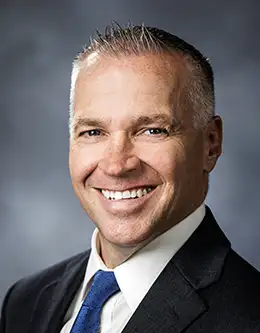
C. Shane Reese, president of Brigham Young University, delivered this BYU university conference address on August 25, 2025.